THE BIBLE
There is no single "Bible" and many Bibles with varying contents exist. The term Bible is shared between Judaism and Christianity, although the contents of each of their collections of canonical texts is not the same.
Different religious groups include different books within their Biblical canons, in different orders, and sometimes divide or combine books, or incorporate additional material into canonical books.
The Hebrew Bible, or Tanakh, contains 24 books. Christian Bibles range from the 66 books of the Protestant canon to the 81 books of the Ethiopian Orthodox Church canon.
The first part of Christian Bibles is the Old Testament, which contains, at minimum, the 24 books of the Hebrew Bible divided into 39 books and ordered differently from the Hebrew Bible. The Catholic Church and Eastern Christian churches also hold certain deuterocanonical books and passages to be part of the Old Testament canon.
The second part is the New Testament, containing 27 books: the 4 Canonical gospels, Acts of the Apostles, 21 Epistles or didactic letters, and the Book of Revelation.
Youtube Videos on The Bible (190)
 Prophet Muhammad and
 Books Banned from
 Prophet Job -
 How
 Adam, Eve and Seth - Stories from
 Parallel accounts in
 Allah in
 Prophet Muhammad in
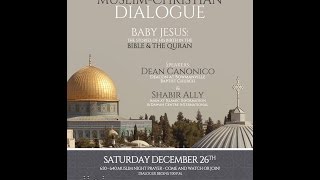 Baby Jesus: His Birth in
 Muhammed in
 What is
 Christian Dilemmas: Secret History of
 How does Christianity establish Justice in
 Is
 Was Muhammad foretold in
 Does
 Does
 Contradictions in
 Gospel of Thomas: Why is it not in
 Constantine did not choose
 Is Muhammed prophesised in
 Is Muhammad foretold in
 Is Makkah (Mecca) in
 What does
 Islam In
 Is
 Does Jesus use violence in
 Are
 How
 Is Trinity supported in
 Can
 Is David and Muhammad a Prophet in
 In Quran 10:94, God commands Muslims to study
 Is Muhammad prophesied in
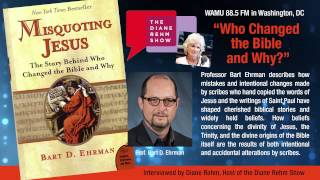 Misquoting Jesus: Who changed
 In John 7:53,
 On
 1 John 5:7 proves
 Pagan Gods In
 Pagan Gods In
 Pagan Gods In
 What Is
 Mistakes in
 Prophets in

 Who wrote
 1 John 5:7 added
 How to Read
 Banned From
 Who wrote
 How do we explain
 Should 1 John 5:7 be in
 Jesus' Resurrection: Mark 16:9-20 was added into
 In Numbers 31:18,
 Is
 Grooming Gangs of America: Human trafficking by White Christian Men. Do we blame
 Grooming Gangs of America: Human trafficking by White Christian Men. Do we blame
 Mark 7:16 is missing from
 Jesus: A Mystery - Mysteries of
 In
 Show me Trinity in
 Show me Trinity in
 In Numbers 1:46,
 History of
 In Leviticus 11:7,
 In

 In John 1:1, a 'Word With Him' is a common phrase in
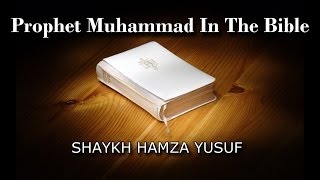 Muhammad in
 Prophets in
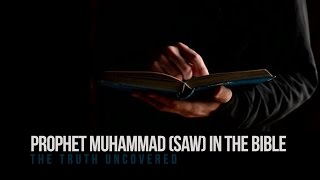 Muhammad in
 Muhammad in
 Muhammad in
 Is
 Trinity is not in
 At
 At
 How Badly Has
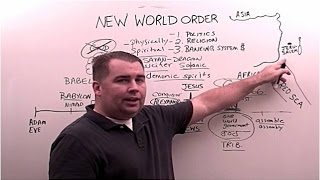 New World Order in
 In Genesis 1:1 and John 3:16, 'Allah' is mentioned in
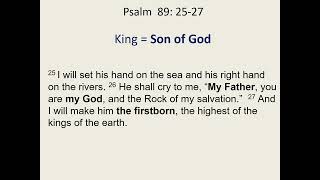 Sons of God in
 Authorship of
 Where is Muhammad in
 In John 7:53,
 For me,
 Keeping Old Testament in
 Christians today differ on what constitutes
 Early Christians freely disagreed on Christian fundamentals as
 In Ezekiel 18:21,
 In Ezekiel 18:21,
 Quoting
 Muhammad met 5-points qualifying as a Prophet. What's
 Muhammad met 5-points qualifying as a Prophet. What's
 In Isaiah 42, Muhammad is found in
 God inspired Scribes to insert verses into
 Jesus' Birth Narrative contradictions in
 Homosexuality, Sodom-Gomorrah and Lot in
 Evidence for Trinity in
 Show me Muhammad glorifying Jesus in
 Show me Muhammad glorifying Jesus in
 Discussion on Jesus, Apostle Paul and
 Is
 In John 3:16, God gave his 'One And Only Begotten Son'. in some versions of
 In Romans 1:27,
 Alcohol & Wine in
 Torah and Injeel are not in
 Quran & Hadith date to Muhammad's life.
 How
 Story of
 God 'spoke' to me in
 Shemesh,
 Greek Philosophy won at Council of Nicaea.
 Israeli Minister:
 Lost Books of
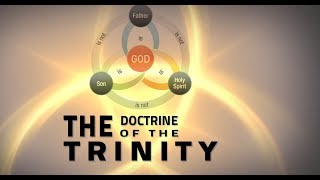 Trinity is not in
 Jewish Messiah will die for our Sins? Prove it from
 King James 'authorized'
 Muhammad in
 Muhammad in
 Is Muhammad mentioned in
 Jesus never explicitly says 'I Am God' in
 Noah in
 Adam in
 Prophets in
 Lot in
 Jacob in
 Job in
 Prophet Muhammad in
 Moses in
 Aaron in
 David in
 Noah in
 Who made
 False Prophets in
 Israel will expand 'From Nile to Euphrates' according to
 Passion City Church?
 Who wrote
 Where is December 25th and 'this bastid' in
 Solomon -
 Moses Before
 Canada Law can imprison Christians for quoting
 Quran affirms
 Creation of Adam & Eve |
 Where did Jesus claim to be GOD in
 Methuselah -
 Methuselah -
 Who was Judah in
 Jesus Existed - Just NOT in
 Show me Free Will in
 Queen Esther - A Hidden Hero in
 Queen Jezebel
 Job - Faith in
 Is Muhammad in
 A Muslim Understanding of
 A Muslim Understanding of
 A Muslim Understanding of
 A Muslim Understanding of
 A Muslim Understanding of
 A Muslim Understanding of
 A Muslim Understanding of
 A Muslim Understanding of
 A Muslim Understanding of
 A Muslim Understanding of
 A Muslim Understanding of
 A Muslim Understanding of
 Understanding Hell in Christianity and
 Father-Son-Holy Spirit: Can GOD be identified in
FAQ on The Bible (42)
1.Do Muslims believe in The Bible?
Muslims believe that God originally revealed the Gospel to Jesus as a source of guidance, light, and instruction.
2.What is the Bible?
The Bible is the holy book of the Christian faith.
3.Where did the name Allah come from?
The word Allah is the standard Arabic word for God used in all Arabic Bible translations, and its roots are identical to the Aramaic word 'Eloi' used by Jesus on the cross.
It was used in some English translations of the Bible like the original 'Scofield Reference Bible'
In the New Testament, Jesus is believed to cry before his death 'ELOI, ELOI, LAMA SABACHTHANI', Eloi is the exact Arabic word 'Elahi' which comes from the same root as Allah.
4.In the Bible, God says 'For God so loved the world, that he gave his only Begotten son'
The words 'Begotten' and 'Son' are not factually accurate when describing Jesus's relationship to the divine Creator. To support this point, it contrasts the Biblical text with the Quran, specifically quoting Chapter 19, Verses 88-92, which strongly condemns the claim that God has begotten a son, describing the assertion as a monstrous falsehood that contradicts the absolute majesty of the Creator.
5.Why Jews do not accept Jesus as the Messiah?
The Bible claims the Messiah will accomplish certain signs:
1. Build the Third Temple (Ezekiel 37:26-28).
2. Gather all Jews back to the Land of Israel (Isaiah 43:5-6).
3. Usher in an era of world peace, and end all hatred, oppression, suffering and disease. As it says: 'Nation shall not lift up sword against nation, neither shall man learn war anymore.' (Isaiah 2:4)
4. Spread universal knowledge of the God of Israel, which will unite humanity as one. As it says: 'God will be King over all the world—on that day, God will be One and His Name will be One' (Zechariah 14:9).
The historical fact is that Jesus fulfilled none of these messianic prophecies.
Christians counter that Jesus will fulfill these in the Second Coming, but Jewish sources show that the Messiah will fulfill the prophecies outright, and no concept of a second coming exists.
6.Who were the authors of the books in the Bible?
Mainstream biblical scholarship notes that the four New Testament gospels were originally written anonymously and did not carry their authors' signatures inside the early texts. Christian tradition later attributed them to Matthew, Mark, Luke, and John based on early church history and theological consensus.
7.When was the Torah written?
Mainstream biblical scholarship tracks the composition of the Torah (the first five books of the Bible) through a gradual process starting from traditional Mosaic oral codes to written records compiled during the mid-to-late 1st millennium BCE. While early fragments exist in ancient archaeological discoveries like the Dead Sea Scrolls, the authoritative text was systematically finalized and preserved by Jewish scribes over centuries of scriptural copy transmissions.
8.Does the Bible tell us to act like slaves?
Historically, the Bible has been used by some to enslave, subjugate and dominate over a people.
The 'Curse of Ham' Myth: Pro-slavery advocates twisted Genesis 9 to claim that people of African descent were divinely cursed to be eternal servants.
Old Testament Legal Protection: Slaveholders cited Leviticus 25 to argue that purchasing foreign bondmen and passing them down as inherited property was biblically sanctioned.
Weaponising Obedience Verses: Plantation owners frequently read verses like Ephesians 6:5 ('Slaves, obey your masters') to religiously brainwash enslaved people against rebelling.
The Redacted 'Slave Bible': British and American authorities physically censored the scriptures, deleting the entire Book of Exodus to hide the narrative of freedom from bondage.
Enforcing Fugitive Slave Laws: Pro-slavery preachers used Paul's letter to Philemon to argue that runaway slaves were legally and spiritually obligated to return to their masters.
9.Is Muhammad mentioned in the Bible?
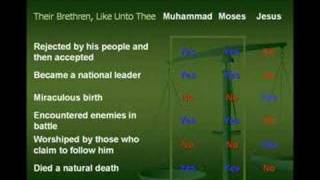
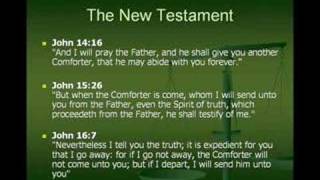
Mainstream Christian and Jewish biblical scholars state that Muhammad is not mentioned anywhere in the Hebrew Bible or New Testament, as these texts predate Islam by centuries. However, Islamic theology interprets specific biblical passages as prophecies of his coming, most notably Deuteronomy 18:18 (a prophet 'from among their brothers') and the promised 'Comforter' (Paracletos) in John 14-16, which Muslims believe refers to Muhammad rather than the Holy Spirit.
10.Does the Bible support the Trinity (3-in-1) God concept?
Mainstream biblical scholars and historians state that the doctrine of the Trinity is never explicitly laid out as a formal dogma anywhere in the text of the Old or New Testaments. While the New Testament contains early triadic formulas (such as the baptismal command in Matthew 28:19 and apostolic blessings in 2 Corinthians 13:14), the actual systemic theology of a three-in-one God was developed later by early church fathers over centuries. Christian theologians argue that the doctrine is implicitly woven throughout the scriptures, while critics and Islamic scholars point to the lack of clear, direct scriptural definitions to argue it was a later modification of strict biblical monotheism.
11.The Bible is about peace and forgiveness
No, historical-critical analysis shows that the Bible is a vast anthology containing highly diverse themes, including both messages of profound peace and accounts of severe warfare. While the New Testament emphasizes love, grace, and forgiveness through Jesus, the Old Testament contains complex legal codes, civil laws, and narratives where God commands total military warfare and strict retributive punishments against rival nations to protect the monotheistic identity of ancient Israel.
12.What is the punishment for apostasy in The Bible (Old Testament)?
In the legal codes of the Old Testament, most notably Deuteronomy 13:6-11, the prescribed statutory punishment for an Israelite who entices others to worship foreign gods is death by public stoning. While historical narratives like Exodus 32 document severe executions for national apostasy (such as the incident with the Golden Calf), biblical scholars note that this capital penalty was legally designed to protect the monotheistic identity of ancient Israel.
13.Is the Bible a peaceful scripture with no violence?
No, historical-critical analysis proves the Bible contains highly diverse themes, including intense descriptions of ancient warfare and divine judgments. In the Old Testament, there are several instances where God commands total military destruction such as Moses ordering the execution of Midianite captives in Numbers 31 or Joshua's campaigns in Canaan to legally protect Israel's monotheistic identity from neighboring polytheistic influences.
14.What is the oldest manuscript of the Bible New Testament?
It is of enormous importance in establishing the biblical text. There are three earliest manuscripts of the Bible New Testament:
1. Codex Alexandrinus is one of the earliest and most important manuscripts of the entire Bible in Greek
2. Codex Sinaiticus is one of the most important books in the world and is kept in the British Library. Handwritten well over 1600 years ago, the manuscript contains the Christian Bible in Greek, including the oldest complete copy of the New Testament.
3. Codex Vaticanus in Rome
15.There is only one Bible with one Christian doctrine?
No, textual criticism shows the Bible consists of thousands of varying manuscripts rather than a single, uniform text. These textual differences, such as in Jude 1:5, have historically contributed to diverse theological interpretations within Christianity.
Bible versions translate verses with different explanations. For example, in JUDE 1:5, who saves and then destroys the people of Egypt?
17 Bible versions state the 'Lord' did
7 Bibles state 'Jesus'
1 Bible claims 'God' did
These differences give rise to different Christian theological views.
16.What do Christian scholars say about the Trinity?
Mainstream scholars acknowledge that the Trinity is not explicitly defined in the New Testament but was formulated later by combining various verses and theological concepts.
Scholars freely admit that the Trinity is never presented as a complete doctrine in the New Testament, but rather is built from scattered Bible verses.
In the New Testament there is no explicit statement of the doctrine
Evangelical Dictionary of Theology (p. 1112)
It is not a Biblical doctrine in the sense that any formulation of it can be found in the Bible
New Bible Dictionary (p.1221)
The New Testament does not present a systematic presentation of the Trinity. The scattered segments from various writers that appear throughout the New Testament reflect a seemingly accepted understanding that exists without a full-length discussion.
Holman Bible Dictionary (p.1372)
Theologians admit the New Testament does not define the Trinity. Furthermore, there is no clear teaching that salvation depends on the belief in the Trinity.
17.Is the word 'Bible' used in the Bible itself?
No, the specific title 'Holy Bible' is not found within the biblical text itself, as the underlying Greek word biblos or biblia was simply a standard, generic term used in antiquity to describe a collection of any books or scrolls. For example, in Acts 19:19, when the text mentions that people compiled and burned their biblos, it refers to their local books of magic arts rather than sacred scripture.
18.Who are the Gods in the Bible?
Historically, the term 'God' was applied to powerful figures, such as leaders and magistrates, who served as representatives on Earth. Emperor Constantine referenced this, citing Psalm 82:6 to remind bishops of their high, albeit human, office.
Emperor Constantine at the opening of the Council of Nicaea (325 AD) quoted Psalm 82:6 to remind the bishops that their high office should raise them above jealousy and party feeling.
The term 'God' was applied to people of power, authority and rule who were considered to have greater nearness to God than others - an appellation which implies that you are God's representatives on earth, and that your decision is, in an important sense, to be regarded as his.
19.Who translated the Bible from Greek into Latin?
Saint Jerome (342-420) was commissioned to translate the gospels from Greek into Latin. This key Catholic Biblical scholar was highly regarded and often represented with the figure of a lion.
20.When were Catholics encouraged to read the Bible for themselves?
In 1909, Pope Pius X first encouraged Bible study. For the first time, Catholics could now study the Bible for themselves and Catholicism returned to being a 'religion of the book' for the people
21.In John 9:38, Jesus is worshipped like a God?
While the verse describes a healed blind man worshipping Jesus, the webpage highlights that this verse is absent from the Codex Sinaiticus, the oldest 4th-century New Testament manuscript . It appears only as a later marginal addition, suggesting a deliberate insertion by a scribe to support the doctrine of Jesus' divinity .
According to verse 38, a blind man is healed by Jesus, and after seeing Jesus he worships him.
In the Codex Sinaticus, the oldest manuscript of John, dated to 330-years after Jesus, verse 38 is not recorded. The entire verse 38 appears as an additional footnote on the side of the Codex Sinaticus.
Verse 38 was inserted into the bible to prove that Jesus was worshipped and that he acknowledged and allowed the people to worship him.
This proves that the early Jewish-Christians did not interpret Johns gospel in the way we do today. At some point a scribe felt so strongly about the divinity of Jesus that he was compelled to include a footnote into the main text as an actual verse.
22.Who wrote the first English Bible?
In 1535, William Tyndale became the first man to produce a printed English version of the Bible, which led to his capture, imprisonment in Belgium, and his eventual execution by strangulation and burning at the stake.
23.How was the Bible used to manipulate the people?
The 16th century translators of the Geneva Bible harnassed it to promote their anti-monarchist views.
The medieval Church prohibited use of the Bible to ensure people believed that they were told, not what they read, or others read to them.
24.Who was Lazarus of Bethany in the Bible?
In the Gospel of John, Lazarus was a close friend of Jesus Christ and the brother of Mary and Martha. They lived in the village of Bethany near Jerusalem.
25.What was the miracle of Lazarus of Bethany in the Bible?
Lazarus fell ill and died. According to the text, Jesus arrived four days after Lazarus was buried in a tomb, ordered the stone to be rolled away, and commanded, 'Lazarus, come out!' The Raising of Lazarus is considered one of Jesus' most significant and dramatic miracles, directly setting off the events leading to the Crucifixion because it drew massive public attention.
26.Is Prophet Aaron mentioned in the Quran and the Bible?
Yes, Aaron is prominently featured in both traditions. The Quran references him by name over 20 times as Harun, highlighting his eloquence, nobility, and partnership with Moses.
27.Is Prophet Adam mentioned in the Quran and the Bible?
Yes, Adam is a central figure in Judaism, Christianity, and Islam. In the Quran, he is mentioned by name 25 times and is highlighted as God's Khalifah (vicegerent or steward) on Earth. In the Bible, his creation, life in Eden, and initial command from God are detailed in the Book of Genesis.
28.Who were Aram's descendants mentioned in scripture?
The Bible lists Aram as the father of four sons: Uz, Hul, Gether, and Mash. His eldest son, Uz, is traditionally associated with the land where Prophet Job (Ayyub) lived.
29.Is Prophet Joshua mentioned in the Quran and the Bible?
Hebrew Bible / Old Testament: He is the central figure in the Book of Joshua and features prominently in Exodus and Numbers as Moses' loyal attendant and one of the 12 spies sent to scout Canaan.
Islam: While not explicitly mentioned by proper name in the Quran, classical Islamic scholars identify him as the young companion who accompanied Moses on his journey to meet Al-Khidr (Surah Al-Kahf). His status as a prophet is explicitly affirmed in Hadith literature.
30.Is Mary mentioned in both the Bible and the Quran?
Yes, Mary plays a central role in both scriptures:
Bible: Featured prominently in the Gospels of Matthew, Luke, and John, highlighting her devotion, presence at Jesus's birth, early life, miracles, crucifixion, and early church gathering.
Quran: An entire chapter, Surah Maryam (Chapter 19) is named in her honor. She is praised as a noble, chaste, and chosen woman above all women of the worlds.
31.Who founded Christian Science?
The Christian Science religion was founded by Mary Baker Eddy in 1879 in Boston, Massachusetts. Eddy established the church following a dramatic personal recovery from a severe spinal injury in 1866, which she attributed to reading a New Testament healing account. In 1875, she published her foundational textbook, Science and Health with Key to the Scriptures, which remains the definitive companion guide to the Bible for all Christian Scientists.
32.Do Deists believe in the Bible or Jesus?
Deists reject the Bible as the infallible, divinely inspired word of God, viewing it instead as a historical human document filled with mythology. Consequently, they do not accept Jesus Christ as the divine Son of God, nor do they believe in his resurrection or miracles. However, historical and modern Deists often express profound respect for Jesus as a brilliant moral teacher and philosopher whose ethical instructions on love and compassion are highly valuable.
33.Did the ancient Greek religions have a holy book like the Bible?
No, ancient Greek religion had no single holy book, sacred scripture, or centralized religious dogma. Instead of relying on a strict text like the Bible or Quran, their religious beliefs, cosmologies and moral frameworks were preserved through oral traditions, epic poetry - most notably Homer's Iliad and Odyssey and Hesiod's Theogony and local civic rituals.
34.Do Jehovah Witness believe in a hell?
No, Jehovah Witnesses do not believe in a literal hell of fiery torment. They teach that the soul is not immortal and ceases to exist at death. When the Bible mentions Sheol or Hades, Jehovah's Witnesses interpret these terms as the common grave of mankind where the dead remain in an unconscious, sleep-like state until the future resurrection.
35.What is the Book of Mormon and how does it relate to the Bible?
The Book of Mormon is a sacred text that Latter-day Saints revere as scripture alongside the Holy Bible. Believed to be a record of ancient prophets who lived on the American continent from roughly 600 BC to 400 AD, it was translated by Joseph Smith from golden plates. Church members view the Book of Mormon as 'Another Testament of Jesus Christ' that supports, clarifies, and works in tandem with the Bible.
36.What is the difference between New Age and traditional religions?
The primary difference lies in the source of spiritual authority and the concept of God:
* Traditional Religions: Typically rely on external authority, such as sacred texts (the Bible, Quran, Torah), historic dogmas, and a distinct, external Creator God.
* New Age Spirituality: Rejects external dogma and emphasizes personal, subjective experience. 'God' is not viewed as a separate being judging humanity, but as an immanent cosmic energy or higher consciousness found within oneself.
37.Is Rastafari a Christian religion?
Rastafari is heavily rooted in Christianity and uses the King James Version of the Bible, but it is a distinct religion and not a Christian denomination. Rastas believe that traditional Western Christianity has been corrupted by white colonial powers (referred to as 'Babylon') to suppress Black people. They interpret the Bible through an Afrocentric lens, identifying Black people as the true chosen people of God.
38.What are the core beliefs of Seventh-day Adventists?
Adventists share core Protestant beliefs such as salvation by grace through faith, the Trinity, and the authority of the Bible. Also, they hold unique doctrines:
* The Second Coming: The literal, audible, and visible return of Jesus Christ in the near future.
* The State of the Dead: The belief that the dead are in an unconscious sleep state until the resurrection, rejecting the concept of an immediately immortal soul or an eternally burning hell.
* The Sanctuary Doctrine: The belief that Jesus entered a phase of 'Investigative Judgment' in the heavenly sanctuary in 1844 to review the lives of humanity.
39.Who was Ellen G. White and why is she important?
Ellen G. White was a co-founder of the church and a highly prolific author whom Seventh-day Adventists revere as a modern-day prophet. The church teaches that she possessed the biblical spiritual 'gift of prophecy'. While Adventists maintain that the Bible is the sole standard of faith and practice, her extensive writings on theology, education, lifestyle, and health are viewed as divinely inspired guidance that helped shape and unify the church's direction.
40.Is the Seventh-day Adventist Church considered a cult?
No, mainstream theologians and Christian organizations do not classify the Seventh-day Adventist Church as a cult. While some evangelical critics historically labeled them as such due to unique doctrines like the Saturday Sabbath and the status of Ellen G. White. Modern consensus recognizes them as a legitimate, orthodox Protestant denomination. They firmly affirm the divinity of Jesus Christ, salvation through His grace, and the supreme authority of the Bible.
41.Is the Unification Church considered a Christian religion?
While the Unification Church utilizes Christian terminology, references the Bible, and centers on the figures of Jesus and God, mainstream Christian denominations do not recognize it as an orthodox Christian church. Catholic, Orthodox, and Protestant theologians reject Unification theology due to its unique beliefs. Most notably, the church teaches that Jesus failed to achieve his complete mission because he was crucified before he could marry and father sinless children.
42.What does the Greek phrase Ego Eimi mean in the Bible?
The Greek phrase 'Ego Eimi' (??? ????) literally translates to 'I am' or 'I exist.' While it is grammatically a common first-person singular present-tense copula used in everyday conversation, it carries profound theological significance in the Gospel of John, where Jesus uses it to claim a unique divine identity and pre-existence.